Comparing a Collection of 35-70mm Zoom Lenses
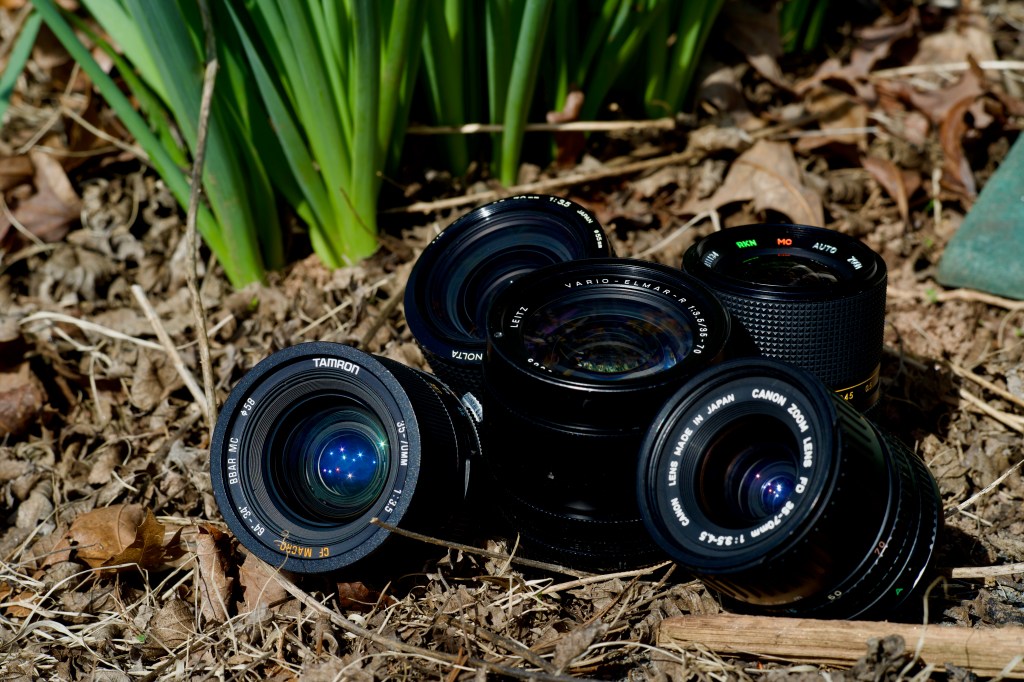
Anonymity is seldom a desirable descriptor for a product, and especially a camera lens. Often sold with a camera body as a “kit” option, the standard zoom lens is a tool to get users familiar with the camera system they have purchased and for budding photographers to explore and develop their photographic style. The 35-70mm zoom lens would supplant the 50mm lens as the kit lens of choice, though in the early years of zoom lens development, these lenses were not the economical, plastic-fantastic lenses sold by the thousands in later years. These were promoted as technological feats of engineering. Advertised as the optical equivalent to three prime lenses in a single, more versatile lens. As lens technology has advanced, it has become more common to see a wider zoom range such as a 28mm or 24mm at the wide end, reaching into moderate wide-angle territory, to 80mm or even past 100mm on the telephoto end for greater reach and versatility.
Here I have put together a little test comparison of some of these normal zoom lenses. A few of these have garnered a legendary reputation, some fetch an eye-watering price on the used market, yet others are seen as nothing more than functional body-caps sold with camera bodies as a bonus. So how good (or bad) are these lenses really? I was curious in seeing the differences between these lenses. Shed a little bit of light (get it..) on the genre and stigma that surrounds these ubiquitous zooms.
Some similarities of all of these lenses (besides the focal range) is that all of these lenses have rotating front elements when you focus. So fans of circular polarizing and graduated or variable ND filters will be thrilled…(shakes my head). All of the lenses also change length when focusing, although some more so than others. Now that I think I have all of the disclaimers covered, lets get to the contenders!
The Line-Up
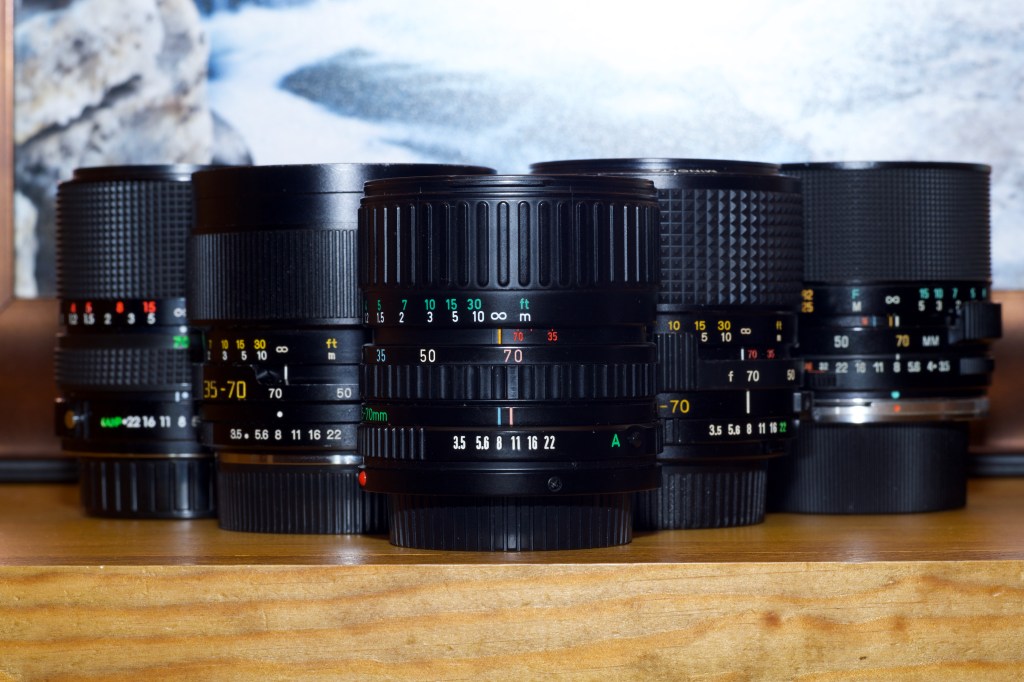
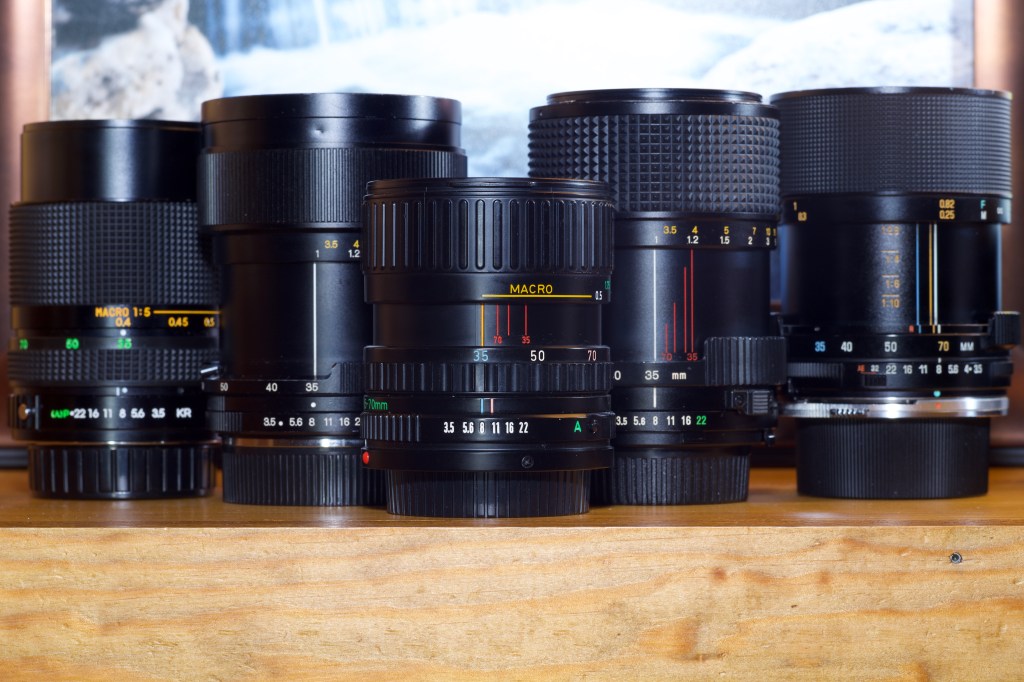
In alphabetical order by brand, we start with a Canon FD 35-70mm f/3.5-4.5. Introduced in 1983 alongside the Canon T50, this lens was the world’s first lens with a three-group zoom system. Rather than simply extending linearly when zooming, this lens retracts and extends internally as you move the zoom ring. The lens never changes dimension when changing focal length and this design allows the lens to be remarkably compact. That, along with the heavy use of industrial plastic construction, the Canon is the smallest and lightest lens in this group weighing a mere 193.63 grams (6.83 oz) and a maximum length of 70mm. This lens would be great on many small and lightweight mirrorless cameras and is so unobtrusive that you can just keep it in a bag with you.
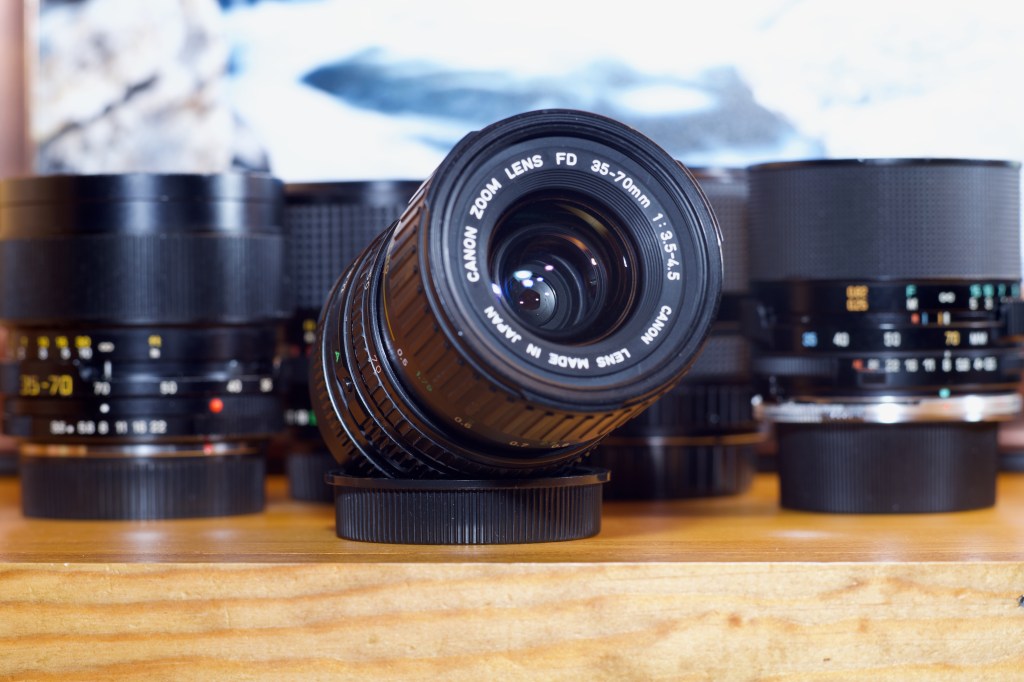
Despite the inexpensive nature of this lens, with a variable aperture and plastic construction, Canon did not skimp on the optics with the most glass used than the rest of these lenses with 9 elements in 8 groups. The aperture however has the fewest number of blades at five, producing a very pronounced pentagonal shape to out of focus highlights.
Next is a Leica Vario-Elmar-R 35-70mm f/3.5. In contrast to the Canon, this lens is the beast of this group. The Vario-Elmar is the largest, heaviest, and most expensive lens in this group at 453.31 grams (15.99 oz), uses an annoyingly odd 60mm filter size, and is usually priced in excess of $280 used IF you are fortunate enough to find a copy in good shape for near that amount. All of this excess, if you would call it, translates into a luxury normal zoom lens. Made entirely of glass and metal, this lens has the best feel of the group with the smoothest and most precise movements and a built-in lens hood, which I think every lens should feature.
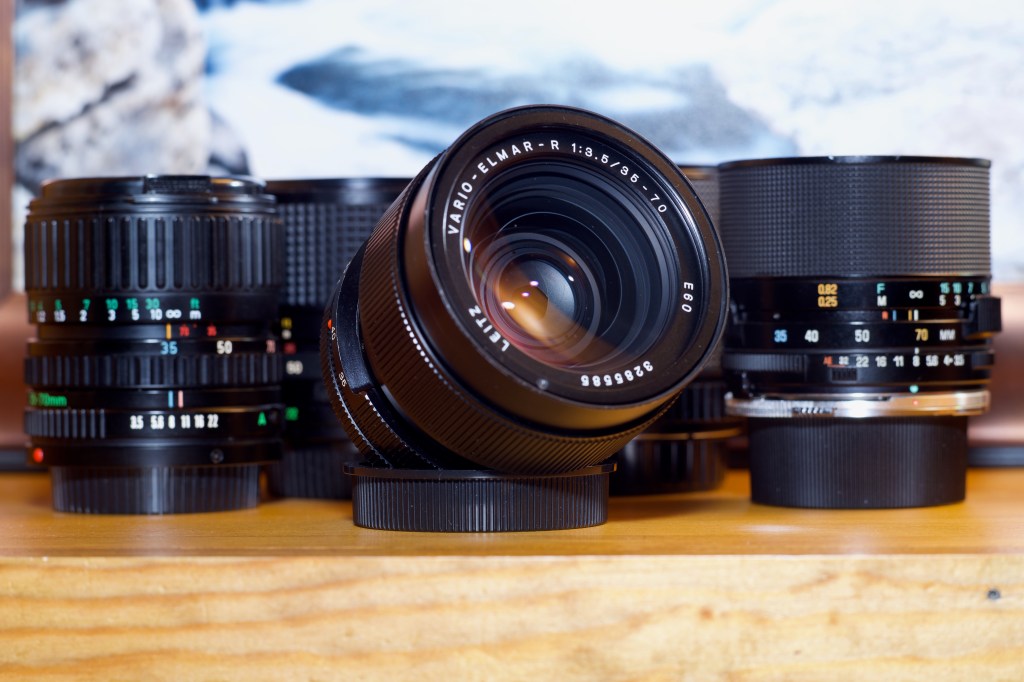
Sounds like we have already announced a champion in this comparison. How could a lens with such presence and precision build be scrutinized? Well that brings me to the next contender and the reason that inspired this comparison review.
A near twin to the Leica is the Minolta MD 35-70mm f/3.5. In fact this lens is the basis for the Vario-Elmar. Leica collaborated a lot with Minolta in developing SLR cameras and lenses. Almost all of the R-series cameras were based on a Minolta chassis and shutter system that were then altered with Leica treatments to the build and feature list.
Minolta produced several optics for R-mount lenses. The 35-70mm f/3.5 Vario-Elmar and the Minolta MD share the same 8 element/ 7 group optical design, the same physical design and function, the same 6-blade aperture, the same close focus distance of 1 meter (3.28 ft), and the Vario-Elmar is even made in Japan. Yet there are differences.
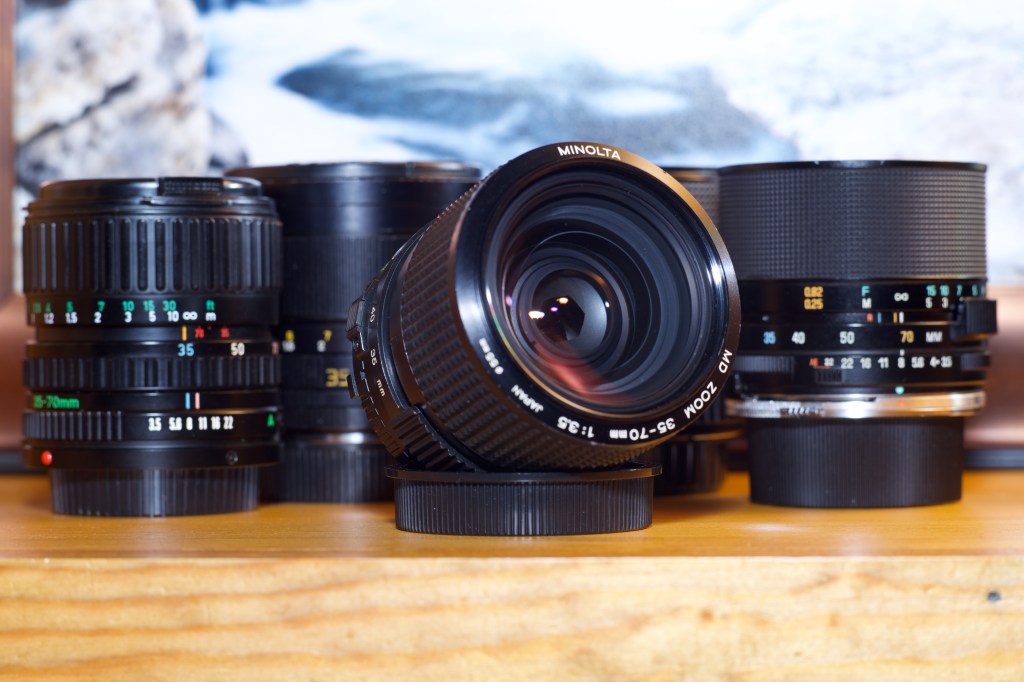
The MD is lighter at 378.18 grams (13.34oz) thanks in part to the choice use of some plastic in the construction (the aperture and zoom rings) and a lighter overall body casting. It also uses a more common 55mm filter thread. However, the MD did not get a built-in lens hood nor does it have half-stop detents throughout the entire aperture range like the Leica does. Lens coatings are also no doubt different as well. Minolta was known to prioritize color reproduction consistency between lenses, which is great for you filmmakers out there, but sometimes at the expense of ultimate flare resistance and aberration control.
Next is an interesting Ricoh (RKN) 35-70mm f/3.5-4.5. Interesting because the origins of this lens are a bit of a mystery. From what I can surmise from my research is that this optic was likely manufactured by Samyang. I have seen some other odd branded lenses identical to this one, even right down to the paint scheme on the face plate. Even several Samyang lenses have the same green brand and red multi-coating (MC) markings. And this lens was made in Korea. Bundled with my Ricoh KR-5 II Super (itself a rebranded Cosina CT-1 Super), this lens can be found cheaper than it costs to ship it anywhere. Not at all a high-dollar optic, but one with a few surprises of its own.

Coming in at 328.29 grams (11.58 oz) the Ricoh is the second lightest lens, yet it feels nice. The only plastic is the zoom ring and everything moves with a fluidity that nearly matches the Leica. The aperture has defined detents that feel nice in use, although this is the only lens of the group to not provide half-stops through the aperture range. The aperture itself contains 6 blades, but they do not form a uniform hexagonal shape as you stop it down. The shape reminds me of the original Asahi Optical Co. logo.
The most unique thing about the lens when compared to the others is that the focus ring remains stationary when you zoom or change focus. This means the grip position is always in the same location which could prove beneficial to anyone wanting an inexpensive optic to modify for cinematic use. The focus ring on the other lenses extend a lot when focused and/ or focal length is changed which would make the use of a focus follower difficult or impossible to implement. Not that the other lenses are hard to use, but it is reassuring that the controls are always in the same locations at all times.
Lastly a Tamron 35-70mm f/3.5 (Model 17A) CF Macro. This is another standard zoom lens with quite the reputation. As a third-party lens manufacturer, Tamron has always strived to bring unique, quality optics at a great value. Released in 1981, this lens proved to be a formidable force offering comparable (if not superior) optical performance in comparison to the big-brand lenses along with the added capability of allowing a very close focus distance of 0.25 meters (9.84 in), which is the closest of this group, and a high 1:2.8 magnification ratio. The Tamron is also compatible with their 2x tele-converter increasing this magnification. Such a combination is not commonly advertised with standard zoom lenses and greatly increases the versatility of this lens.
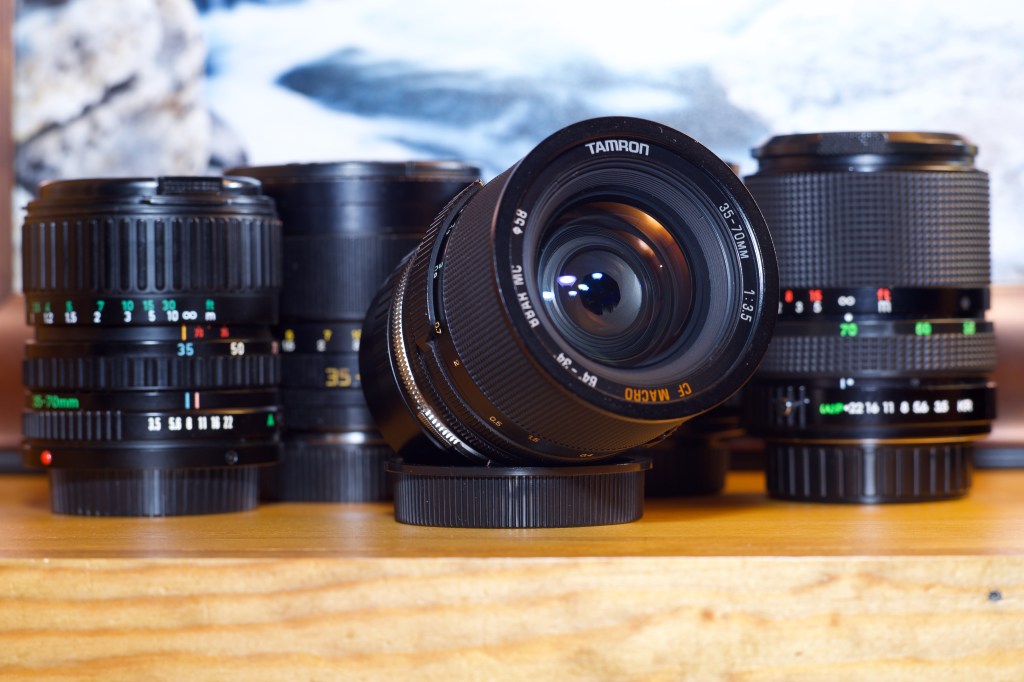
I would describe the Tamron as the most dynamic of this test. While its physical dimensions and functionality are very similar to the Leica and Minolta lenses, it does so with much more flair. The focus throw for example, when at 70mm, is over 280 degrees! The front element extends to the same length at 35mm as when at close focus at 70mm. Which brings me to a unique difference with this lens; the closest minimum focus distance is only available at 70mm. The other lenses in this group can reach the same minimum focus distance regardless of the focal length selected.
The build of this lens is also on par with a quality blend of mostly metal and glass with only a few choice plastic bits. Despite having the fewest number of lens elements (7 elements in 7 groups), the Tamron is the second heaviest lens at 398.88 grams (14.07 oz). The lens aperture sports the most blades in this group with 8 blades making for a mostly rounded aperture opening. Bokeh fans will appreciate this. The aperture also features half stops throughout most of the range with whole stops moving into f/22 and f/32 (the smallest marked aperture of any lens in this group).
Now with introductions out of the way, lets get to the test examples and see how each of these lenses compare with each other.
I toiled relentlessly on finding a quality representation of the capabilities of these lenses. I thought of setting up a still-life display and resolution charts, but I did not have the space necessary to satisfy equal testing at various focal lengths and focus distances. Finally I decided to do a photo walk and use the lenses photographing subjects as I would personally do. I wanted to demonstrate as many characteristics of each lens as possible, so all images were metered using a Minolta Auto-Meter III and white balance set to 5,000 Kelvin. This way changes in exposure and color reproduction are due to differences in the lens and not influenced or compensated for by the camera. All of the lenses were tested on a Leica SL (typ 601) so your results will vary some with different camera bodies, as some cameras are more prone to sensor reflections than others, and different lens adaptors too could impact performance. Also, lens profiles for Leica R lenses are turned off so as to not give any unfair advantages, or otherwise taint the results in the event I forgot to turn it off for the other lenses.
I hope to do more tests like this and welcome feedback on my methodology. I also want to be clear that any comments and conclusions drawn from the results are purely my observations on individual copies of these lenses. Therefore, I can not make broad conclusions about every lens by brand ‘A’ because I do not have a sample size to evaluate.
Close Focus
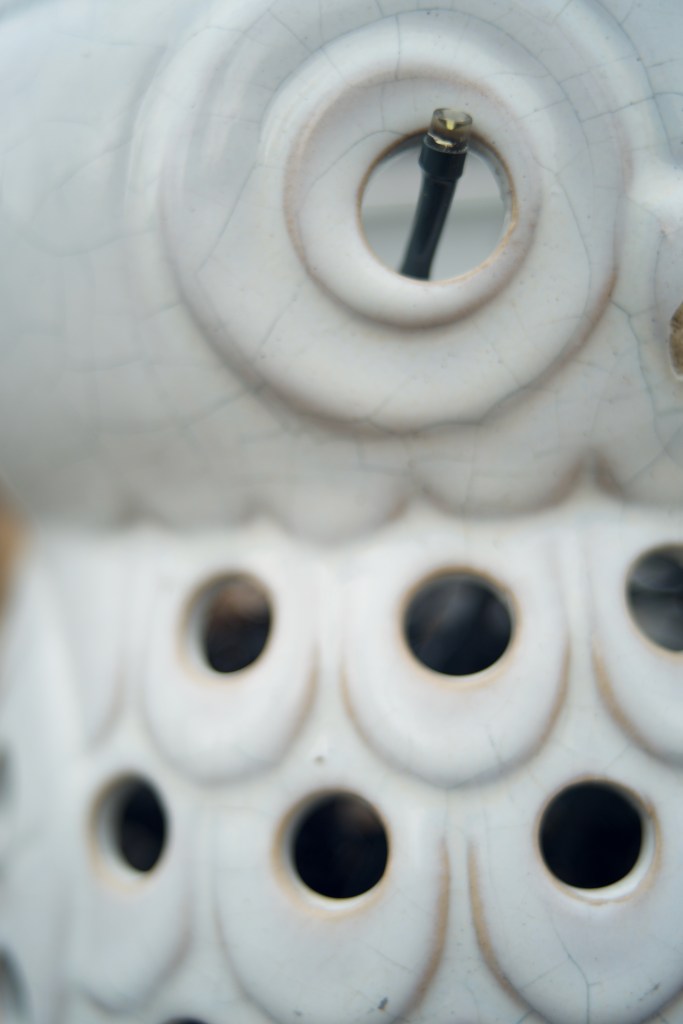
Quickly I want to demonstrate how close each lens can focus when at 35mm and 70mm. The Canon and the Ricoh lenses are similar in their perspective and reproduction. The Leica and the Minolta are handicapped here to 1 meter. Fans of close focus or macro work will be frustrated with these lenses. Although there is a later version of the MD that has a macro mode switch on the zoom ring. The Tamron is unique because it too is handicapped when at 35mm to just under 1 meter. At 70mm is when you can exploit this lens’s macro potential where it focuses down to that super close 0.25 meters without the need to set or engage any special modes.









Scenic Captures
Next I am going to compile a series of scenes taken at Bethabra in Winston-Salem, NC. A historic landmark, Bethabra is the original Moravian settlement in the Wachovia tract before the establishment of Salem here in the Piedmont. Several historic structures, gardens, and nature trails fill the area. A perfect place to trial this set of zoom lenses.
The first set I photographed the Bethabra Moravian Church. A great subject to demonstrate the resolving capabilities of these lenses at distance and at wide angle. Each lens was set to f/8 which should put each lens near or at its best.
The second set is at 70mm and f/5.6 for each lens. I set a framing I liked and attempted focus on the end of the fence rail. The Leica and Minolta could not focus close enough to match focus of the others, however I feel this demonstrates the limitations of these two lenses and this composition shows the out-of-focus rending and color characteristics of each lens.
Next I focused on the Reconstructed Cottage with the lenses at 35mm and again aperture at f/5.6. This will demonstrate the resolution similar to the church scene, but at a near max aperture. This will stress them with the trees in the background showing any hint of possible aberration.
Then we have a wagon wheel. Focus is on the central hub and photographed at about 4 feet from the subject with the lens set to 35mm, and aperture at f/3.5. This time the Leica and Minolta are at their minimum focus distance and you can see the rendering of each lens wide open at the widest focal length.
Lastly there is a rail-line that runs through the area, but unfortunately there were no trains running through that afternoon. However, the rail and rail-bed provide a great texture to test the lenses. Like the wagon wheel, but this time at 70mm, focused on the ‘A’ in Bethabra at about 8 ft away, and aperture at f/3.5 (or f/4.5 for the Canon and Ricoh lenses).

























At first these images look much the same. Then the longer you look, the more different these images appear. The differences are mostly subtle, and only really obvious when these images are reviewed back-to-back. The Canon and the Leica are the biggest surprises to me. An economical and plastic zoom producing images with such color saturation, contrast, and good clarity. This little lens really packs a punch. Look at the textures too. This lens provides good resolving power belying its cost conscious position.
The Leica and Minolta look very similar providing neutral color and high levels of micro contrast, but my copy of the Leica seems to suffer from some heavy spherical aberration. Look closely at areas in the image as you move away from the center of the frame compared to the other lenses. The Leica noticeably turns to mush and never sharpens up like the Minolta does. Even in the church image, the micro-contrast on the Minolta is far clearer.
The Ricoh is an admirable performer with reasonable resolution, but images appear flat and much lower in contrast and color saturation. Images from the Ricoh seem to have a haze or washed out quality to them.
The Tamron combines much of the optical rendering like that of the Canon with high color saturation and contrast along with high resolution and micro-contrast detail like the Minolta. The biggest shift with the Tamron, and also seen in the close-focus examples, is with the color balance. It renders images with a noticeable warmth. Nothing that couldn’t be accounted for with a custom white-balance setting or post editing, but it does render color the least neutral of this set given the test conditions.
Flare Resistance










Above are examples of how each lens resists light flare and the type of starbursts they can produce when the aperture is set to it smallest value. In this scenario the Leica performs the best with good contrast retention and almost no flare or ghosting artifacts present. The Minolta is next performing very well wide open, but stopped down shows some amber tinted flare reflections. This demonstrates that Leica chose a different coating formula than Minolta given that they use the same optical design and performance is otherwise almost identical. The Canon is also a good performer when stopped down and producing a nice starburst effect. Wide open though, some slight flare reduces contrast and detail in the image. The RKN doesn’t produce much distinct flaring at all, but the light washes out the contrast both wide open and when it is stopped down. Flare reduction is the Tamron’s Achilles heel with noticeable ghosting wide open resulting in a reduction in contrast. Stopped down it still shows distinct flaring, but image contrast is much improved. The rounded aperture does give a great stardust effect and the most pleasing shape to the flare. Could prove to be a fun effect if lens flare is your thing.
Conclusions
So to wrap this up, each of these lenses, despite being very similar in spec and function, clearly do not provide the same results or user experience. Are you surprised by the results? Honestly I was. When I started this comparison I thought that I would find very little between the results. Any standard zoom is as good as another, right?
I have been disappointed in the performance of my copy of the Leica lens. Nice rendering and capable of producing a beautiful image stopped down, but I struggled to get the kind of crisp results I wanted when using it at wider apertures. The results in this comparison at f/8 still fall short of the other much cheaper optics in this group. Even with focus-peaking on the SL, achieving accurate focus with this lens is a chore as it lacks the contrast wide-open for the camera to respond. This led me to seek the Minolta MD lens to compare since it uses the same optical formula and has such glowing user reviews.
The Minolta is a great performer overall and produces the results I was expecting from the Leica. It provides great flare resistance with a pleasing, dare I say “natural”, color palette with loads of detail and that dimensional ‘pop’. This lense’s biggest draw-back is its close focus capability. Now I could have sought out the version 3 with the macro switch, but I wanted one as close to the Leica to directly compare performance. Maybe one day I will get another copy of the Vario-Elmar-R and enjoy the results along with that beautiful build quality (that is not to say the Minolta is shabbily built).
The Tamron was one of the first zoom lenses I have owned and I knew that its performance would be tough to beat. It is the most versatile optic of this test and probably one of the most versatile lenses period. Its close-focus capability and quality rendering make this lens a Swiss-Army Knife of optics. Its worst trait is in its ability to fight off lens flare. I highly recommend using a lens hood of some kind with this lens. Light anywhere in front of the lens is a threat to image quality, unless a low-contrast colorful flare is the look you seek.
The Ricoh and Canon lenses were quite a surprise for me. The Ricoh never delivers the ultimate resolution of the best in this test, but for a lens that is often given (if not thrown) away, it really isn’t so terrible. Like the Tamron, use a lens hood as light in the frame can really wash-out the image. As with the Leica, it too is also a struggle to gauge accurate focus with wide-open. However, the user experience is otherwise positive for such a budget lens. It actually feels pretty nice to hold and can provide images with good color and clarity.
The Canon, while feeling very cheap (with its plastic build, a focus ring with a lot of slack in it, making precision focus very tedious, and that annoyingly small, clicky, and stiff aperture ring common to Canon’s FD lenses), really shines optically. If you can look past the build, this lens is an optic gem. Not quite as high a resolver as the Tamron and Minolta, it isn’t far behind and produces images with a natural color palette and punchy contrast. Given this performance with its small size and weight, it’s an easy lens to stash away in a camera bag to have ready at a moment’s notice.
So which of this set of lenses is your favorite? Have a favorite standard zoom I should review? Let me know what you think and if you want me to continue comparison reviews like this. If you have enjoyed reading this, please consider making a donation. Your support will help me to continue building and maintaining this site.
 Photo-47
Leave a comment